 |
| Huff Post GREEN |
Showing posts with label Factory Farm. Show all posts
Showing posts with label Factory Farm. Show all posts
May 19, 2013
Eating as Though the Environment Mattered
Bruce Friedrich's Eating as Though the Environment Mattered discusses the major impacts different diets have on the environment.The article highlights the damage caused by meat production and consumption including that "eating meat causes more global warming than everything else combined" and that "the meat industry causes global poverty." Read the whole article on the Huff Post GREEN blog.

May 2, 2013
Huff Post GREEN: Industrialized Factory Farming
Huffington Post GREEN: First Ag-Gag, Now the Name Game
Paul Shapiro, the V.P. of Farm Animal Protection within the Humane Society of the United States, wrote this article in the Huff Post GREEN blog about the poor treatment of farm animals under the current system of industrialized animal agriculture, highlighting the pork industry in particular. Shapiro states that the practices involved in factory farming are the root causes behind the failing industrialized animal agribusiness. Instead of trying to improve the conditions of factory farms, businesses are electing to cover up the ill-treatment of farm animals through "Ag-Gag" laws and other methods of public deceit. Read the full article by clicking on the link above.
This video shows a debate that CNN hosted about the issue of Ag-Gag laws.
L.A. Vegan Beer Fest
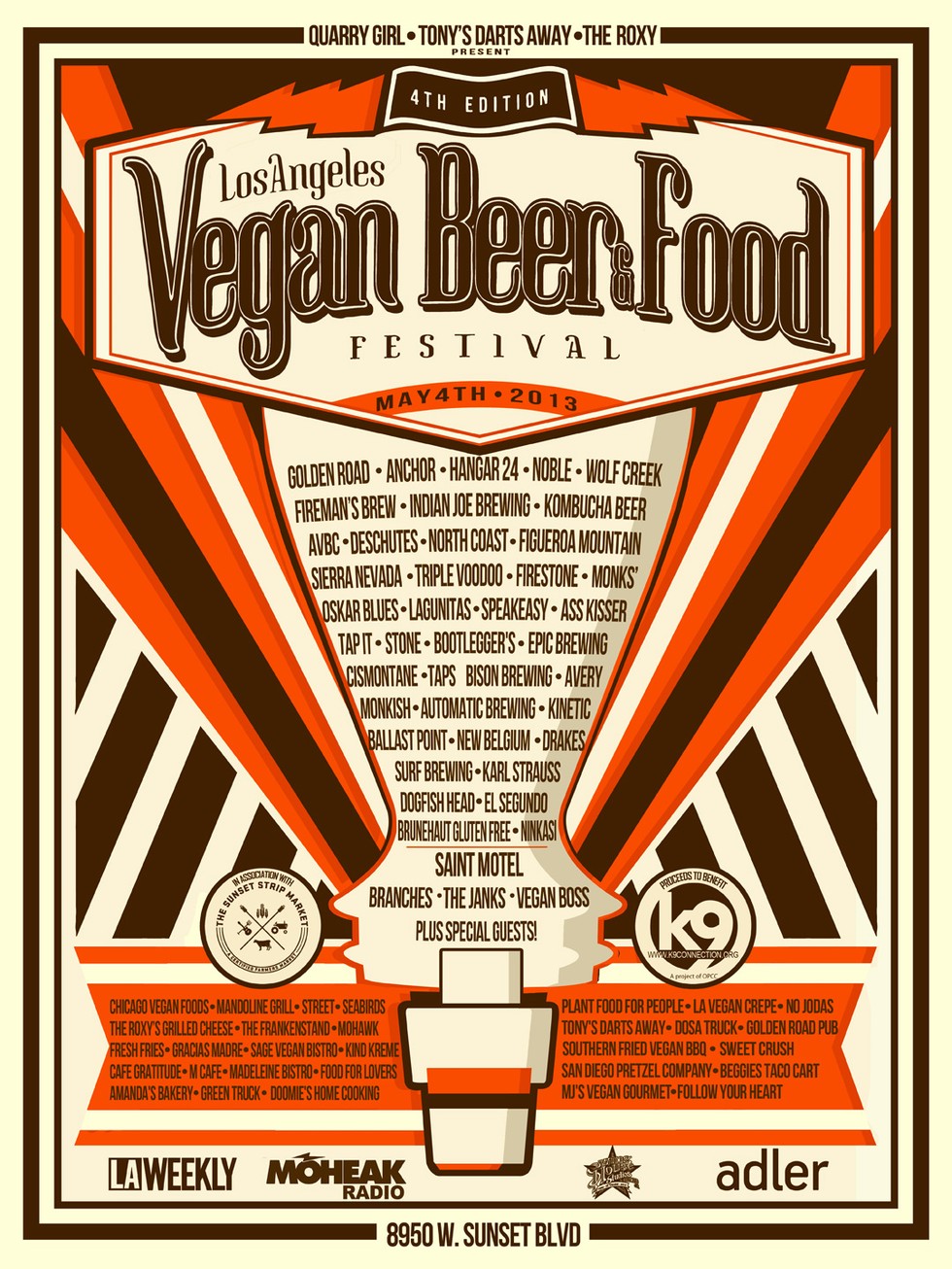 |
| L.A. Vegan Beer & Food Fest |
April 29, 2013
Food Politics
Happy 5th Birthday: Pew Commission
Marion Nestle, author of the book Food Politics, shares valuable insight about the politics involved in food production and distribution in her blog. Check out this link to an article about the Pew Commission on Industrial Farm Animal Production, specifically the report Putting Meat on the Table: Industrial Farm Animal Production in America. Nestle was a member of the Commission herself, and she explains in her article that the most concerning aspect of industrialized farming is the "overuse of antibiotics and the shocking environmental impact of vast amounts of animal waste."
 |
| Foodpolitics.com |
Marion Nestle, author of the book Food Politics, shares valuable insight about the politics involved in food production and distribution in her blog. Check out this link to an article about the Pew Commission on Industrial Farm Animal Production, specifically the report Putting Meat on the Table: Industrial Farm Animal Production in America. Nestle was a member of the Commission herself, and she explains in her article that the most concerning aspect of industrialized farming is the "overuse of antibiotics and the shocking environmental impact of vast amounts of animal waste."
April 17, 2013
The Meatrix
Learn about the horrors of factory farming in this clever video satirically based off of the movie The Matrix.
April 16, 2013
Guide to Buying Sustainable Food
Yale University composed a fairly comprehensive guide about how to find and purchase sustainable food. The guide breaks down the information into sections based on the type of food such as dairy, fruits and vegetables, eggs, poultry, etc... Questions to consider include the location and size of the farm, the types of food the animal in question eats, the farming practices used, as well as many other specifically tailored questions. Click on the link to see the guide, and maybe try it out the next time you go grocery shopping.
Below is an overview provided by the Yale Sustainable Food Project about how to decide what dairy products to purchase.
Best:
"Cows are grazing animals, and their stomachs are made to digest grass. Their diets can be supplemented with grain but should not be primarily composed of it. They should never be given rBST or other growth hormones. Animals should be outdoors year round, and their pasture should be free from chemical sprays. Any additional feed they receive should be organic. In the ideal system, cow manure is used as a resource to fertilize pasture."
Avoid:
"Animals raised in CAFOs (Confined Animal Feeding Operations) are crowded in and fed a grain (usually corn-based) diet, and they are routinely given growth hormones. Their diets might also include animal by-products (the remains of other animals). In this system, manure is a waste product, and it collects in lagoons or is dumped."
 |
| Yale Sustainable Food Purchasing Guide |
Best:
"Cows are grazing animals, and their stomachs are made to digest grass. Their diets can be supplemented with grain but should not be primarily composed of it. They should never be given rBST or other growth hormones. Animals should be outdoors year round, and their pasture should be free from chemical sprays. Any additional feed they receive should be organic. In the ideal system, cow manure is used as a resource to fertilize pasture."
Avoid:
"Animals raised in CAFOs (Confined Animal Feeding Operations) are crowded in and fed a grain (usually corn-based) diet, and they are routinely given growth hormones. Their diets might also include animal by-products (the remains of other animals). In this system, manure is a waste product, and it collects in lagoons or is dumped."
Work Cited:
Sustainable Food Purchasing Guide. Yale Sustainable Food Project, n.d. Web 13 Apr. 2013
Subscribe to:
Posts (Atom)